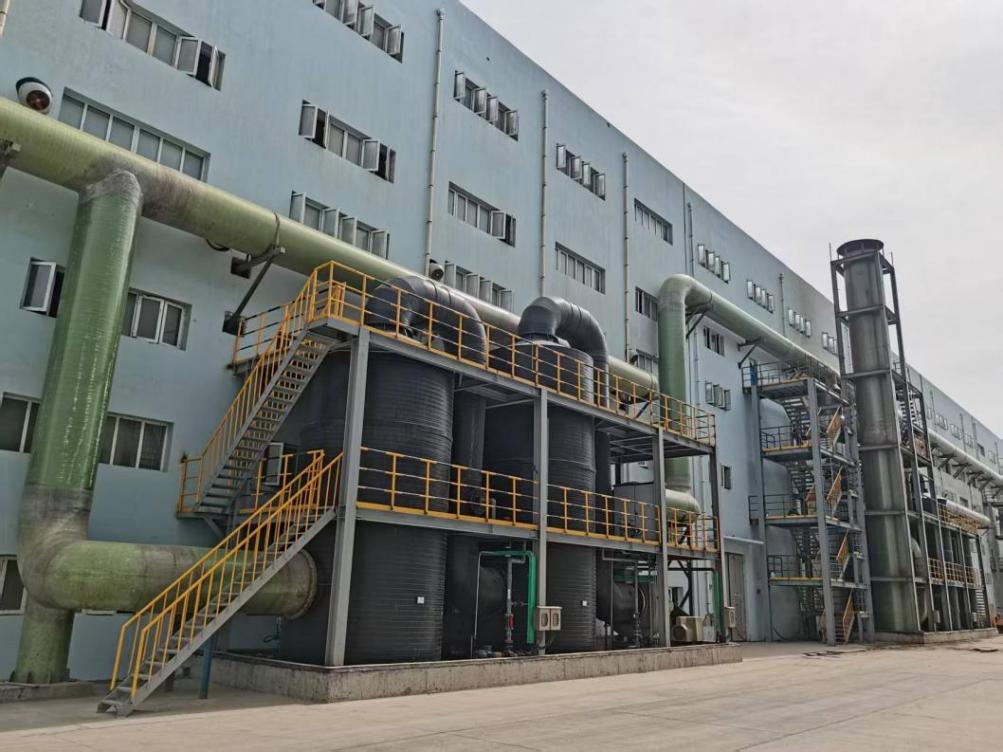
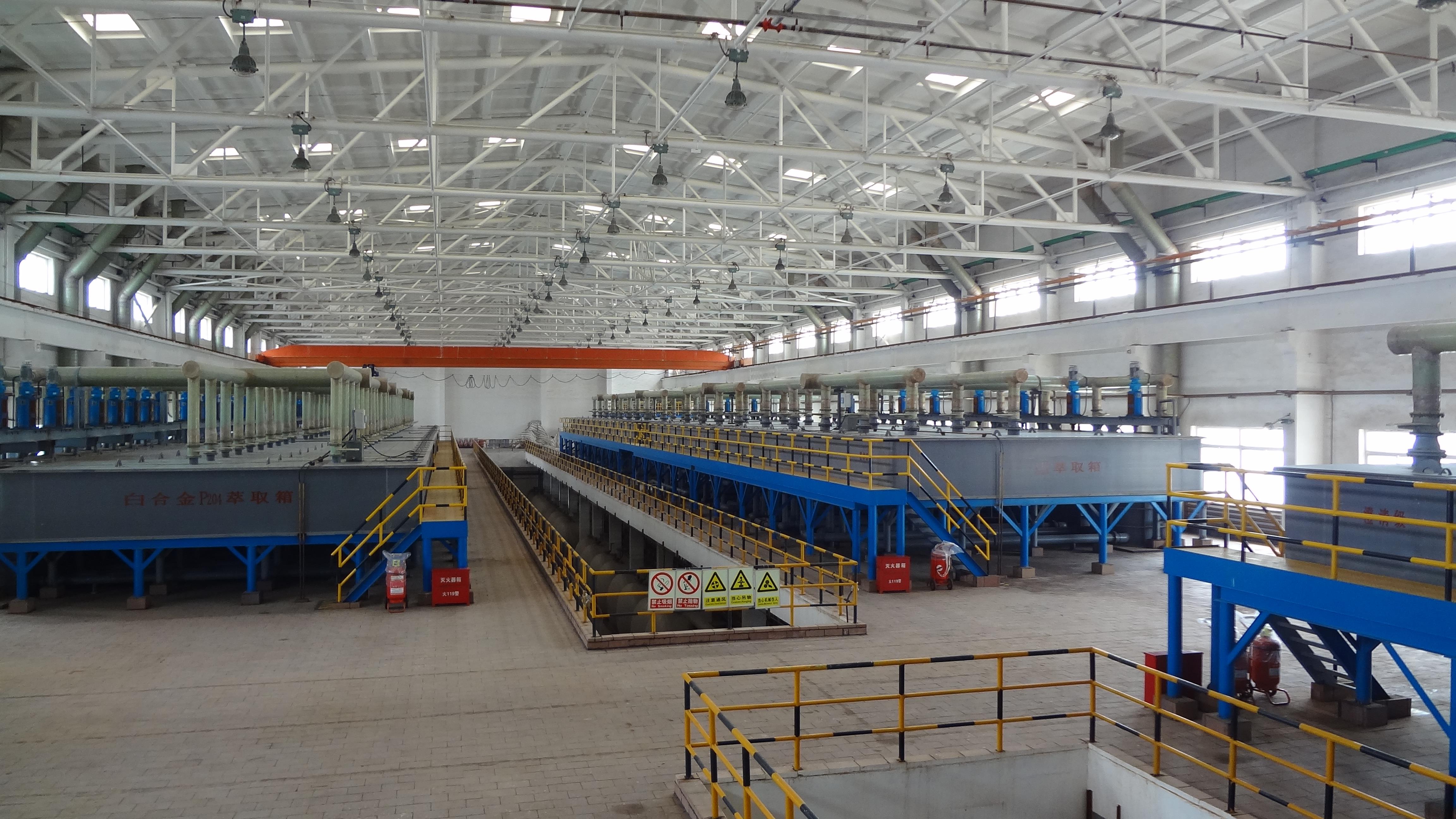
Extraction tanks are production equipment used in large-scale smelting, nonferrous metals, nuclear industry, rare earths, and other industries, primarily for the production of copper sulfate, nickel sulfate, cobalt, and other products. The choice of materials for large-scale extraction tanks is particularly important. Improper material selection can significantly reduce the service life of the extraction tank and result in financial waste.
The extraction tank is primarily fabricated and welded from plates. Considering cost factors, the extraction tank is generally made of PVC, with the PVC plates utilizing S700 PVC resin. The produced plates exhibit a 5-8°C increase in heat distortion temperature, a 1% reduction in linear expansion coefficient, a 1.8% improvement in creep resistance, a 2% increase in impact strength, and a 1.5 MPa increase in tensile strength. Additionally, during the design process of the extraction tank, if the operating temperature exceeds 55°C, CPVC plates should be used, with CPVC utilizing JC-071 resin. This product undergoes an aqueous suspension chlorination process, with a chlorine content of 65-67%, a screening rate of ≥99%, a volatile matter content of ≥0.3%, a temperature resistance of 95-110°C, and excellent resistance to chemical corrosion from acids, alkalis, oxidants, organic compounds, and halogens.
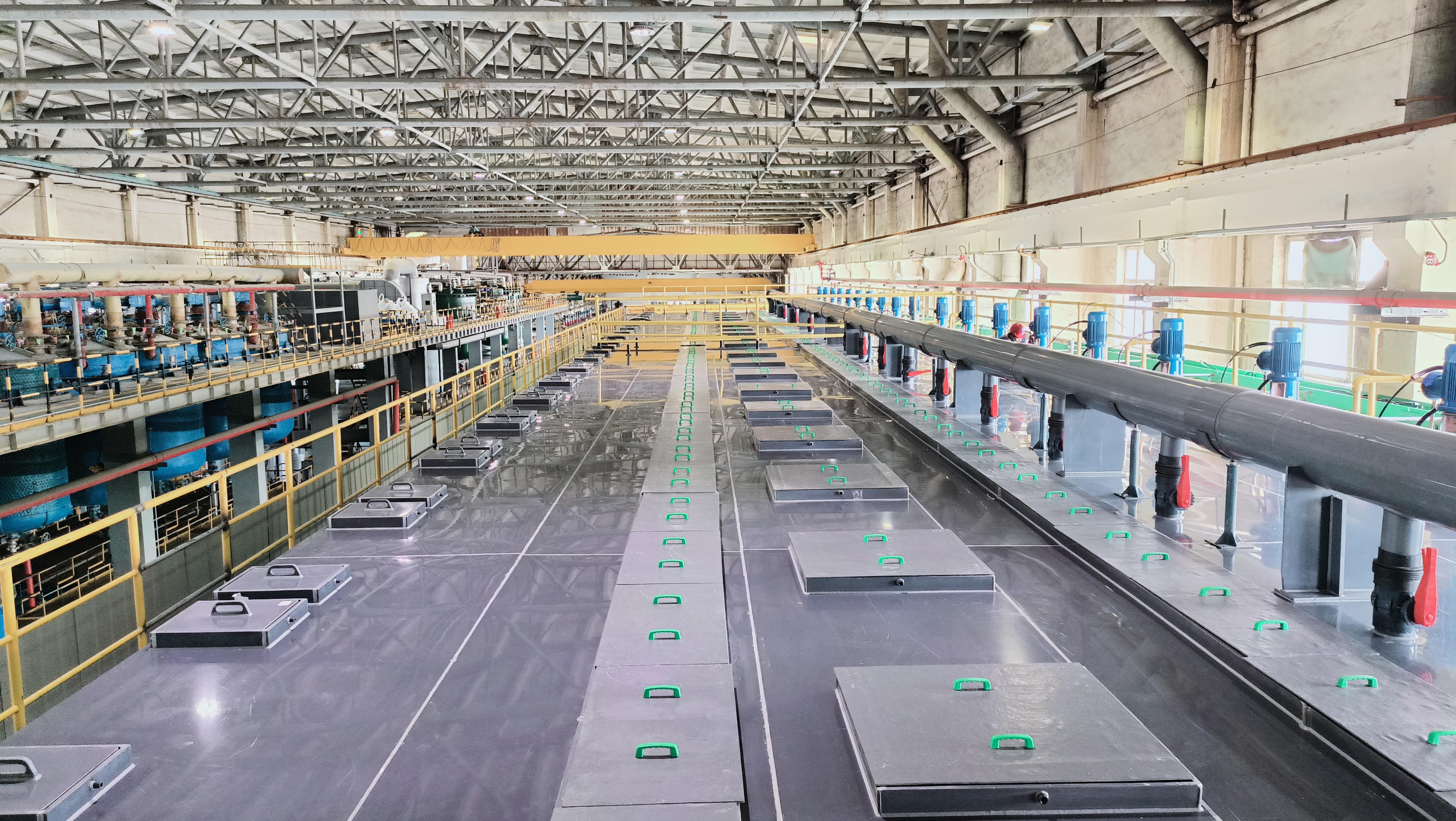
Of course, extraction tanks can also be made of PP or FRP, but they are generally square in shape. Extraction tanks made of PP lack the necessary strength to meet usage requirements, are prone to damage, and have a reduced service life; while those made of FRP can extend the service life, they are more expensive and difficult to maintain in the long run. Nowadays, PP or FRP is generally not used in industry for the manufacture of extraction tanks.
When selecting PVC/CPVC for the production of extraction tanks, it is also necessary to consider the type of processing used to form the board. Currently, PVC boards are available in extruded and pure pressed forms, each with its own advantages. However, in the production of extraction tanks, PVC extruded boards are used due to their ease of processing and low cost. CPVC, on the other hand, is only available in extruded form.
How to judge the quality of CPVC/PVC boards? High-quality CPVC/PVC boards have a glossy surface, with consistent color between the surface and the cut surface. The board surface is flat and smooth, without obvious flaws such as cuts, bubbles, holes, water marks, impurities, or delamination. The four edges after cutting should be free of gaps. In addition, the performance of the board should also be considered:
PVC extruded board: tensile strength (d≤20mm) ≥52Ppa, (d≥30mm) ≥42Mpa, density g/cm³ ≤1.5, Vicat softening temperature ≥73℃, heating dimensional change rate (d≤10mm) ±3%, tensile modulus ≥2500Mpa;
CPVC extruded board: tensile strength (d≤20mm) ≥45Ppa, (d≥30mm) ≥38Mpa, density g/cm³ ≤1.58, Vicat softening temperature ≥122℃, heating dimensional change rate (d≤10mm) ±1.5%, tensile modulus ≥2300Mpa;