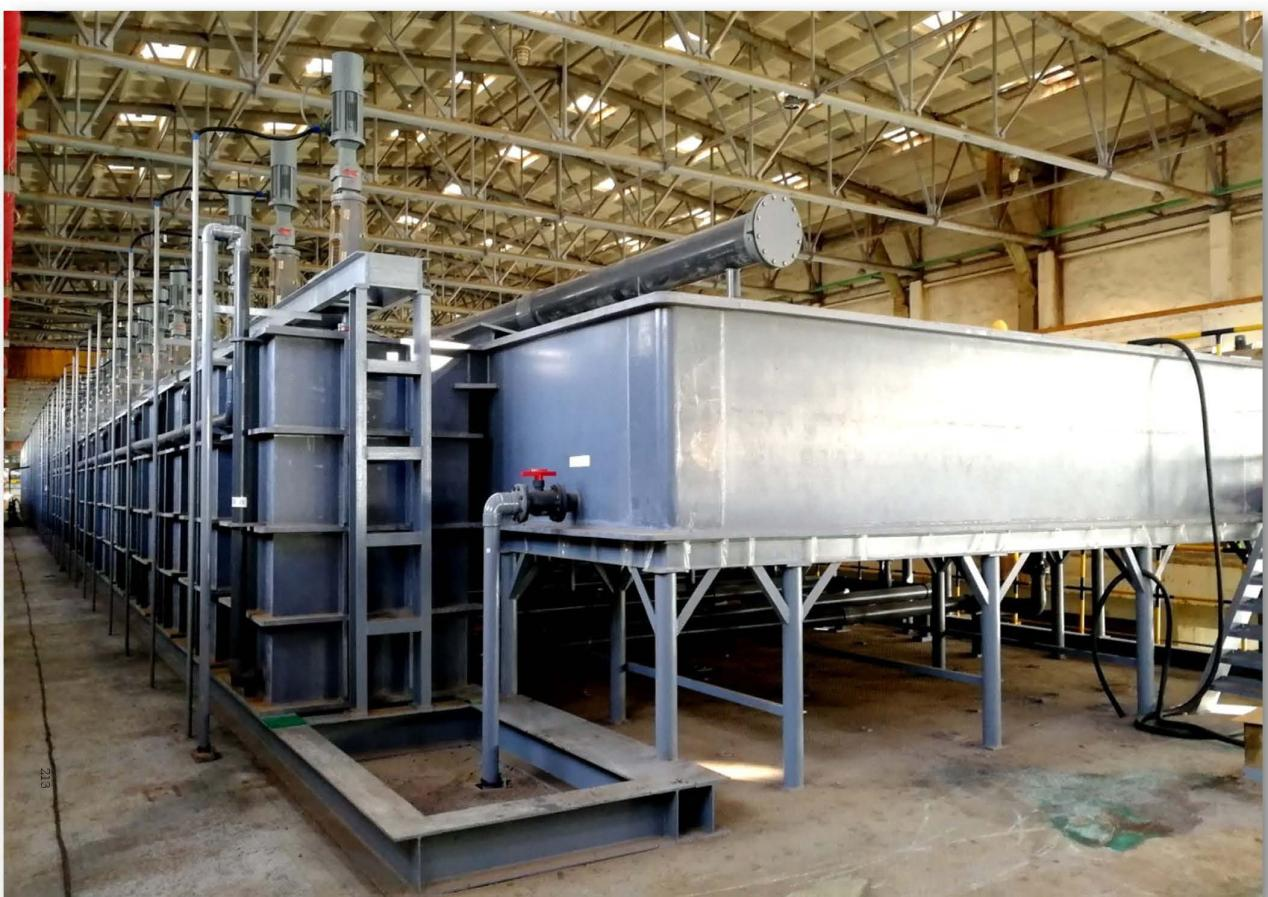
The extraction tank is a large-scale production equipment used in the industrial production of nickel sulfate, copper sulfate, and cobalt. During the processing, a series of issues often arise, such as welding strength, plate stress, plate brittleness, welding speed, and processing environment, all of which can affect the quality of the extraction tank. To ensure the quality of the extraction tank, control measures are necessary in terms of plate processing, construction environment control, and plate processing.
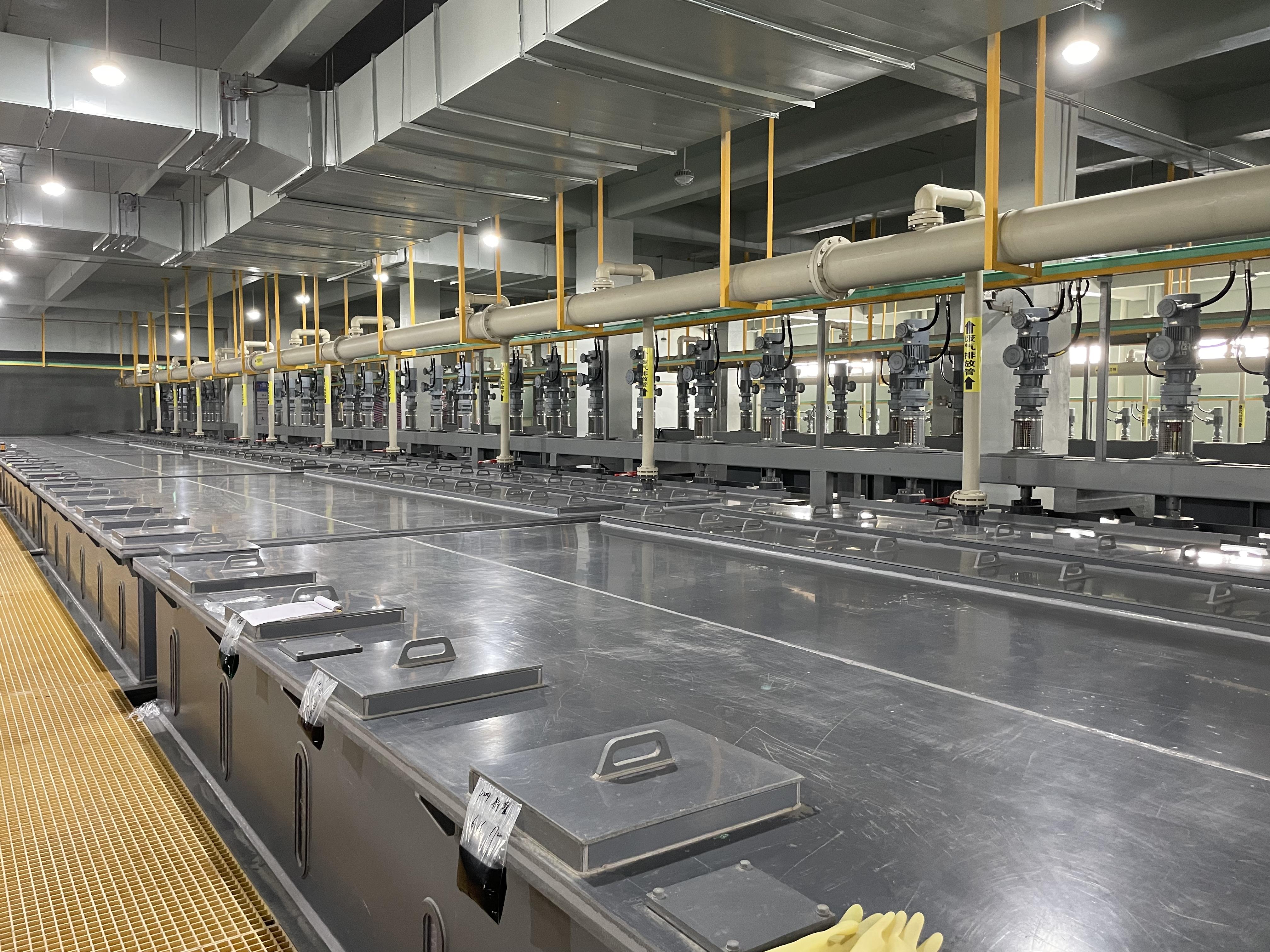
1. Material heat treatment technology
The heat treatment of PVC/CPVC plates for large extraction tanks is a crucial process step, as thermal stress is induced during the heating, extrusion, cooling, and stabilization phases of plate production. This is particularly important in regions with significant temperature variations, where the requirements for materials are even more stringent;
2. Mechanical processing technology
CPVC/PVC materials have poor thermal conductivity, and are prone to localized heating, deformation, and tackiness during processing. Therefore, the cutting speed and feed rate during processing must be appropriately adjusted, and special tools should be used to prevent deformation. Additionally, when cutting rigid polyvinyl chloride (PVC), there will be tool marks on the surface, which can affect the mechanical strength and processing. Therefore, it is required that components with high requirements be polished with emery cloth after cutting. Furthermore, rigid PVC is very brittle at low temperatures, and processing should be carried out in an environment with a temperature above 15°C;
3. Processing environment control technology
The ambient temperature should be controlled at 10-30℃ through ventilation or temperature compensation. Special tools should be used during welding to ensure a dust-free welding area. If outdoor welding is conducted in windy, rainy, or snowy weather, protective measures must be taken; otherwise, work must be suspended;
4. Technical requirements for welding
Clean with acetone before welding, and weld after wiping dry;
The length of the welding rod cannot exceed 15% of the length of the weld seam;
When connecting welding rods for welding, the welding should be done with a 45° bevel edge overlap;
The welding shall be free of voids, and the starting and ending points of welding shall not be at the same location;
The weld strength cannot be lower than 0.7 times the strength coefficient of the base material;
The joints of welding electrodes and welds must be staggered by more than 100mm to avoid affecting the strength
5. R-angle technology
During the normal design process, the extraction box body is molded with vertical right angles, where stress concentration occurs, making it highly susceptible to damage. A fillet transition should be adopted, eliminating weld seams and greatly enhancing the compressive strength. Additionally, the fillet weld seam and the box body can be modified to an X-shaped weld seam, further improving the overall strength of the equipment. Hangzhou Zhonghuan Chemical Equipment Co., Ltd., the owner of this technology, has widely applied it in multiple extraction box projects, with the most extensive application in Jinchuan Group.
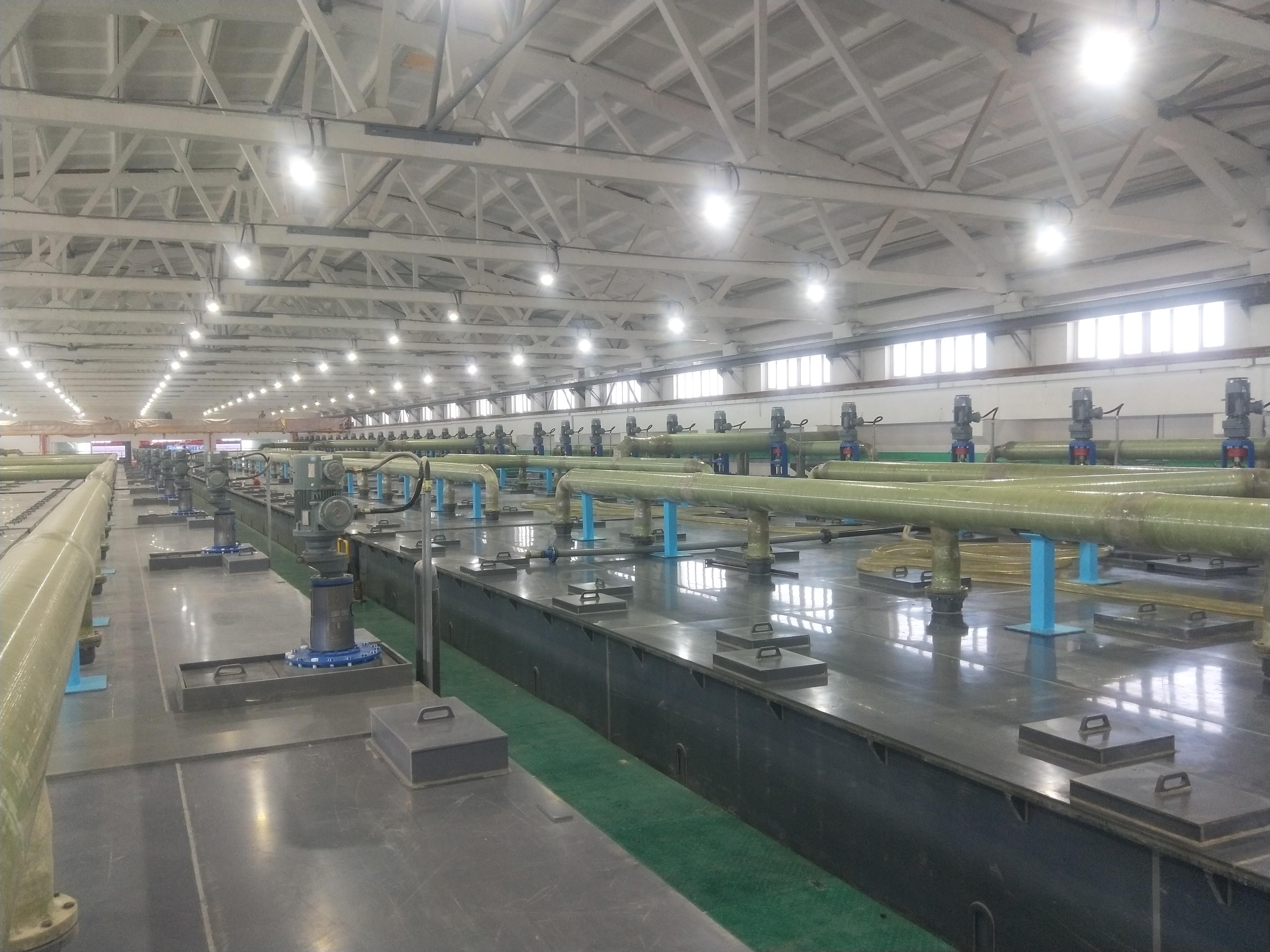
In addition, there are steel support technology, weld seam selection technology, nozzle connection technology, assembly process technology, etc. It is recommended that manufacturers conduct on-site inspections for a more intuitive understanding. The most typical example in the country is Jinchuan Group Co., Ltd., which has dozens of extraction tanks in operation.